


 русский
 Français
 日本語
日本語 Latine
 한국어
한국어 Tiếng Việt
 ไทย
ไทย বাংলা
বাংলা عربى
عربى Hrvatski
 čeština
 dansk
dansk Nederlands
 Pilipino
 Suomalainen
 Deutsch
 Magyar
 Indonesia
 italiano
 Gaeilge
 Bahasa Melayu
 فارسی
فارسی norsk
norsk Polskie
 Português
 Română
 Español
 Slovák
 svenska
 Türk
TürkTudjon meg többet iparági kiállításainkról és cégünk legutóbbi eseményeiről.
• A CNC késes csiszológép PLC programvezérlést alkalmaz, amely könnyen kezelhető, gyors, stabil, ...
See DetailsA Rewinding Knife Grinding Machine operates on the principle of controlled abrasive material removal: a rotating grinding wheel is brought into precise, repeatable contact with the cutting edge of a circular slitter knife, removing micro-layers of worn or damaged steel to restore a geometrically accurate, sharp cutting bevel. The entire process is governed by three interdependent subsystems -- the grinding wheel drive, the knife holding and rotation mechanism, and the feed control system -- working in coordinated sequence to produce a consistent, repeatable edge profile.
In practical terms, the machine clamps the circular knife on a precision spindle, rotates it at a controlled speed, and traverses the grinding wheel across the knife face at a programmed feed rate and depth of cut. The result is a restored bevel angle accurate to within +/-0.5 degrees and a surface roughness typically in the range of Ra 0.2 to Ra 0.8 micrometers, depending on the finishing pass specification.
The grinding wheel is the functional heart of the machine. It is a bonded abrasive tool -- meaning abrasive grains (the cutting agents) are held together by a vitrified, resinoid, or metal bond matrix. As the wheel rotates at high peripheral speed, each exposed abrasive grain acts as a single-point cutting tool, shearing off a tiny chip of knife steel with each pass. This is identical in principle to conventional machining, but at a microscopic scale involving millions of cutting points simultaneously.
Grinding wheel peripheral speed is typically maintained between 25 and 35 m/s for conventional aluminum oxide wheels, and up to 45 m/s for CBN (Cubic Boron Nitride) superabrasive wheels used on hardened tool steel or carbide knives. Higher peripheral speed increases the number of cutting contacts per second, improving surface finish while reducing the chip load per grain -- which extends wheel life.
Material removal rate (MRR) is expressed as cubic millimeters of steel removed per second. In knife grinding, depth of cut per pass is kept deliberately shallow -- typically 0.005 to 0.02 mm per pass -- to prevent thermal damage to the knife edge. Excessive heat during grinding can reduce the hardness of the steel within 0.1 to 0.3 mm of the cutting edge, a phenomenon known as thermal softening or burn, which causes rapid re-dulling in service.

For the grinding process to produce a usable result, the circular knife must be held and rotated with high precision. Runout (eccentricity) of the knife during grinding directly translates into diameter variation on the finished blade. In gang-slitter applications where multiple knives must match in diameter to within 0.01 mm, any spindle runout is unacceptable.
The knife is mounted on a precision-ground spindle using either a collet chuck, a magnetic face plate, or a hydraulic expansion arbor, depending on knife bore diameter and the machine design. Spindle runout on quality rewinding knife grinding machines is maintained at less than 0.003 mm (3 micrometers) TIR (Total Indicator Reading), a specification verified during machine acceptance testing.
The knife itself rotates slowly during grinding -- typically at 5 to 30 RPM -- allowing the grinding wheel to work progressively around the full circumference. This slow rotation ensures that the wheel-to-knife contact arc is consistently maintained, producing a uniform bevel with no flat spots or high points around the knife perimeter. Some machines index the knife in fixed angular steps rather than continuous rotation, particularly when grinding knives with radial features or damage localized to one sector.
The feed system controls two independent axes of motion that together define the grinding result:
On CNC-equipped machines such as the MCD Series Rewinding Knife Grinding Machine, both axes are servo-driven and controlled by a programmable logic controller (PLC) or dedicated CNC unit. The operator inputs the target bevel angle, total stock removal, number of roughing and finishing passes, and traverse speed; the machine executes the cycle automatically and repeats it identically for every knife in the batch.
The bevel angle -- the included angle of the knife cutting edge -- is determined by the angular relationship between the grinding wheel face and the knife face at the point of contact. This relationship is set by tilting either the grinding head or the knife spindle to the desired angle before the grinding cycle begins.
Common bevel angles for different substrates are shown in the table below. These are industry-established starting points; actual angles are fine-tuned based on knife steel grade and specific slitting conditions.
| Substrate | Typical Bevel Angle (Included) | Knife Steel Type |
|---|---|---|
| Paper and board | 40 -- 55 degrees | D2 / HSS tool steel |
| Plastic film (BOPP, PET) | 30 -- 45 degrees | HSS or carbide-tipped |
| Aluminum foil | 30 -- 40 degrees | Tungsten carbide |
| Adhesive tape / PSA | 45 -- 55 degrees | D2 / CPM tool steel |
| Nonwoven fabric | 35 -- 50 degrees | HSS |
The grinding wheel profile -- whether flat-faced, angled, or radiused -- also contributes to the final edge geometry. A flat wheel face produces a flat bevel; a radiused wheel introduces a slight hollow grind, which reduces the included angle at the cutting edge tip while maintaining backbone strength behind it. Hollow grinds are preferred for film and foil applications where extreme sharpness is required.
Grinding generates heat at the wheel-to-workpiece interface through friction and plastic deformation of the chip. Without active cooling, the knife edge temperature can rise to 300 to 800 degrees Celsius within seconds -- well above the tempering temperature of most tool steels (typically 150 to 250 degrees C for hardness-critical applications). Exceeding the tempering temperature reduces hardness and creates tensile residual stresses that promote microchipping in service.
The coolant system on a rewinding knife grinding machine serves four functions:
Coolant concentration is typically maintained at 3 to 8% water-soluble oil or synthetic coolant, balanced to provide lubricity without promoting bacterial growth in the sump (source: IMTS Metalworking Fluid Management Guidelines, 2021). Sump maintenance -- including concentration checks, pH monitoring (target pH 8.5 to 9.5), and regular fluid replacement -- is a standard part of machine upkeep.
As the grinding wheel works, abrasive grains wear and become dull, and the wheel face loads with metal particles. This progressively reduces cutting efficiency and degrades surface finish. Dressing is the process of resharpening and re-truing the grinding wheel using a diamond dressing tool -- either a single-point diamond, a diamond roll, or a rotary diamond dresser mounted on the machine.
During dressing, the diamond tool traverses across the wheel face at a controlled feed rate, fracturing and removing the outermost layer of the wheel to expose fresh, sharp abrasive grain. Dressing also corrects any out-of-round condition that develops as the wheel wears unevenly. On CNC machines, dressing is programmed as part of the automatic cycle and executed after a set number of knife passes or when a force or power threshold is exceeded -- ensuring the wheel is always in optimal condition without operator intervention.
Wheel wear compensation is a related function: as the wheel diameter decreases through dressing and normal wear, the CNC control automatically offsets the infeed position to maintain the correct depth of cut. Without this compensation, a shrinking wheel diameter would produce progressively undersize knife bevels. On machines like the MCD Series Rewinding Knife Grinding Machine, this compensation is handled automatically, eliminating the need for manual diameter offset corrections between cycles.
Understanding each phase of the grinding cycle helps operators optimize machine settings for their specific knife type and condition:
Manual grinding machines require a skilled operator to set depth of cut, traverse speed, and angle for each knife -- introducing variability between operators and between shifts. CNC-controlled rewinding knife grinding machines replace these manual inputs with stored programs, ensuring that every knife ground to a given program receives an identical edge geometry regardless of who operates the machine.
A modern CNC grinding controller stores multiple knife programs (typically 50 to 200 programs on mid-range systems), each containing:
This programmability is particularly valuable in multi-substrate converting facilities where the same machine must grind knives for paper, film, and foil lines. Switching between knife types requires only a program recall, not a mechanical reconfiguration -- reducing setup time from 15 to 30 minutes (manual) to under 2 minutes (CNC program recall).
The working principle described above -- controlled abrasive removal, precise knife rotation, programmed feed axes, active cooling, and automatic wheel compensation -- combines to produce measurable outcomes in converting operations:
| Performance Metric | Manual Grinding | CNC Rewinding Knife Grinding Machine |
|---|---|---|
| Bevel angle repeatability | +/- 2 to 3 degrees | +/- 0.5 degrees |
| Diameter consistency (gang set) | +/- 0.05 to 0.1 mm | +/- 0.005 to 0.01 mm |
| Surface finish (Ra) | Ra 1.0 to 2.0 um | Ra 0.2 to 0.8 um |
| Time per knife | 10 to 20 minutes | 3 to 8 minutes (auto cycle) |
| Regrind cycles per knife life | 4 to 6 cycles | 10 to 15 cycles |
Data in the table above is based on industry benchmark comparisons published by the AIMCAL (Association of International Metallizers, Coaters and Laminators) Technical Committee, 2022. Actual results vary by knife steel grade, substrate, and machine condition.
The extended regrind cycle life achievable with a properly operated CNC machine results directly from the controlled thermal environment (preventing edge softening) and consistent material removal (preventing over-grinding that accelerates diameter loss). Over a knife population of 200 blades, the difference between 6 and 14 regrind cycles represents 8 additional service lives per knife -- directly reducing annual blade procurement cost.
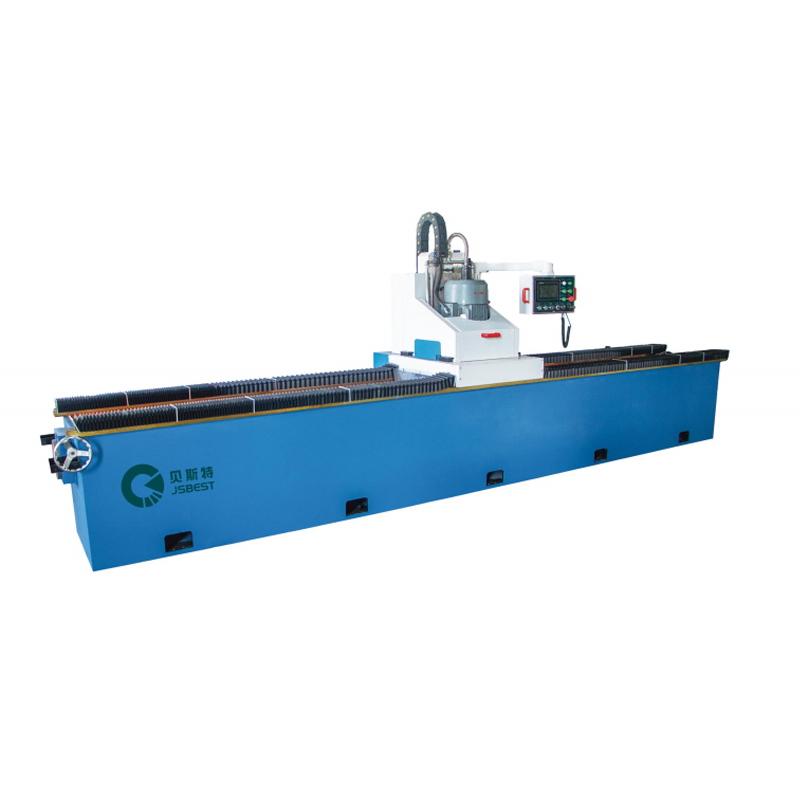
• A CNC késes csiszológép PLC programvezérlést alkalmaz, amely könnyen kezelhető, gyors, stabil, ...
See Details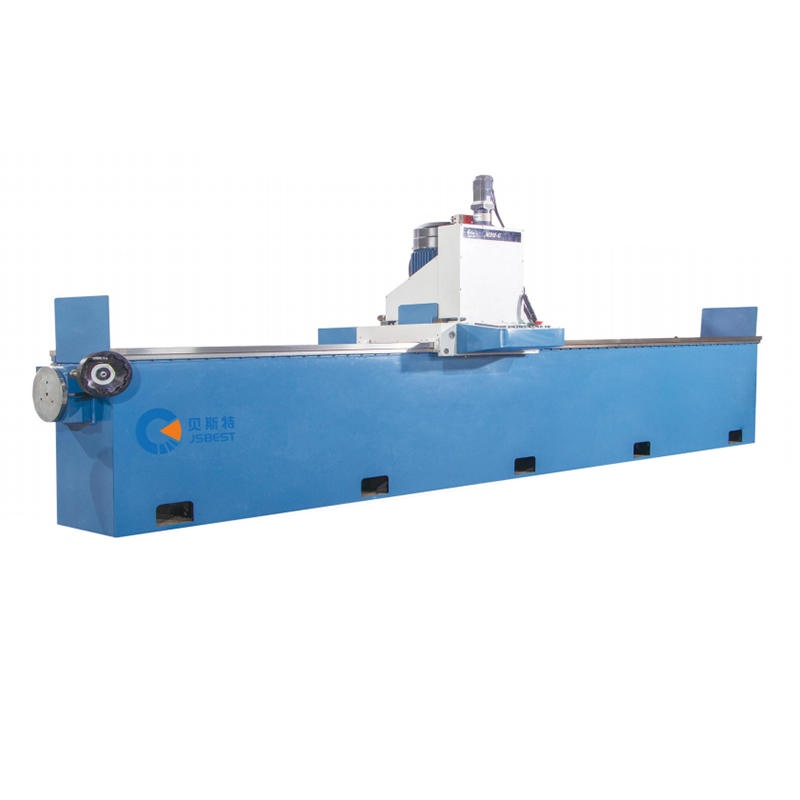
• Az egész gép nagy szilárdságú portál típusú hegesztőszerkezetet alkalmaz, szilárd és kompakt ál...
See Details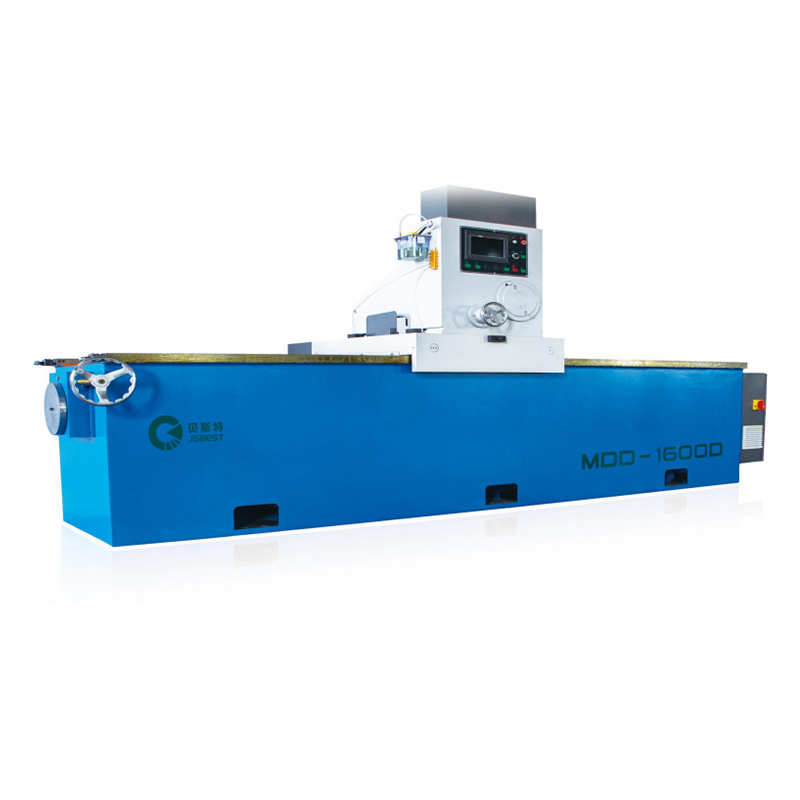
• A csiszoló portál típusú ágyat, kiváló minőségű acéllemez hegesztést, magas hőmérsékletű temper...
See Details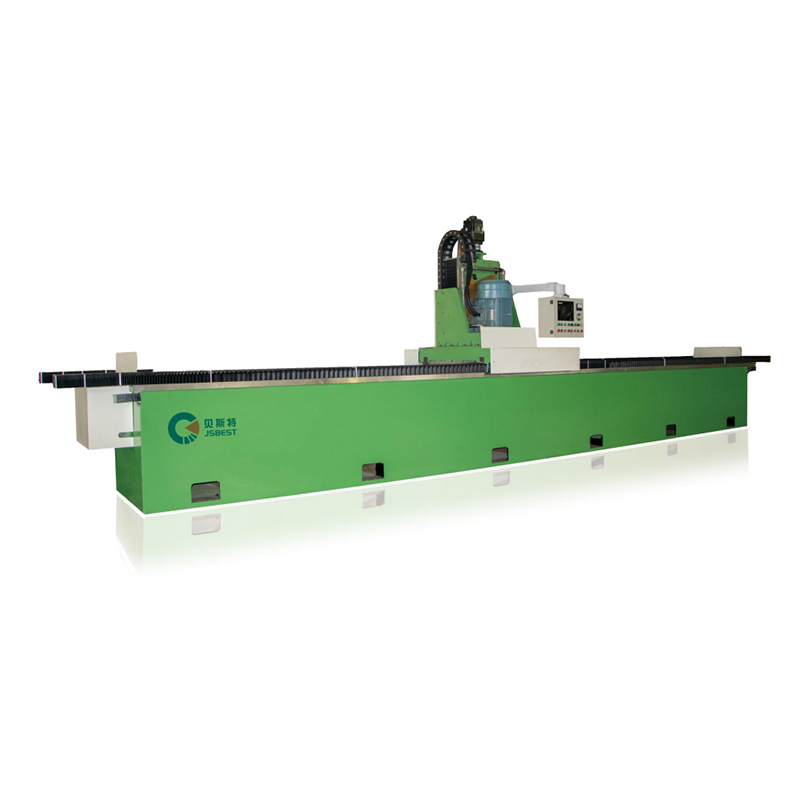
• A belső feszültség kiküszöbölésére nagy szilárdságú hegesztett acélszerkezetet alkalmaznak ...
See Details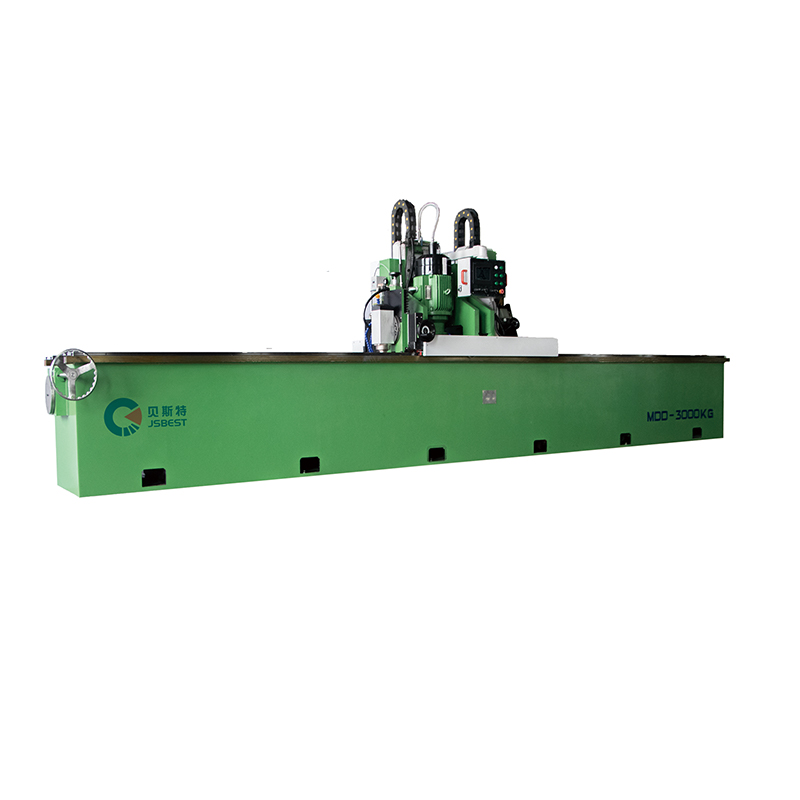
A kétfejű késes csiszológép egy hatékony csiszolóberendezés, amely egyesíti a durva köszörülést é...
See Details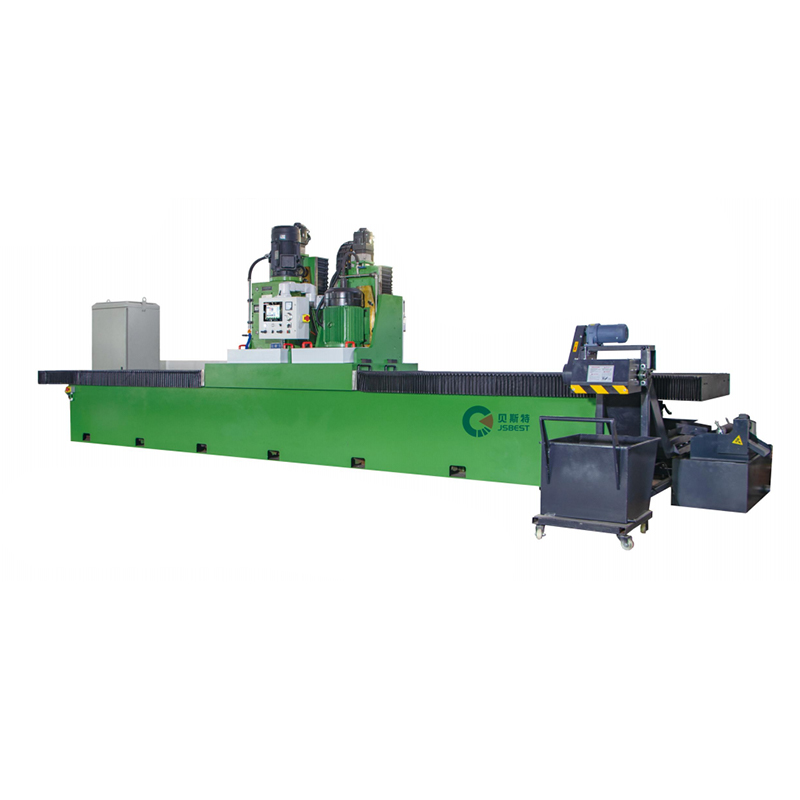
A nagy teherbírású felületi maró- és csiszológép egy hatékony feldolgozó berendezés, amely integr...
See Details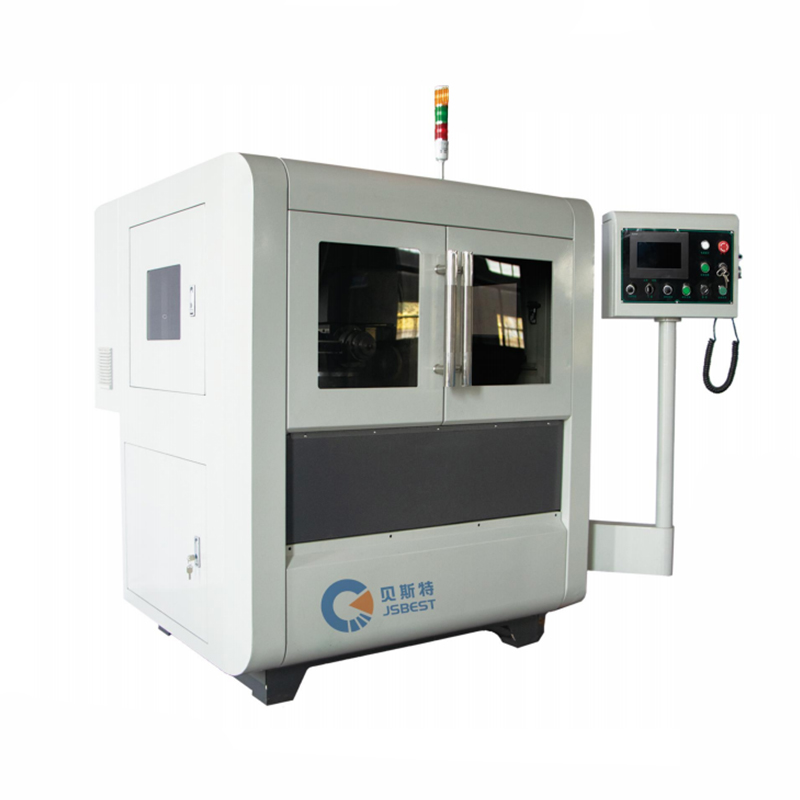
• Ez a körkéses daráló egy PLC programot alkalmaz az automatikus adagoló rész vezérléséhez, amely...
See Details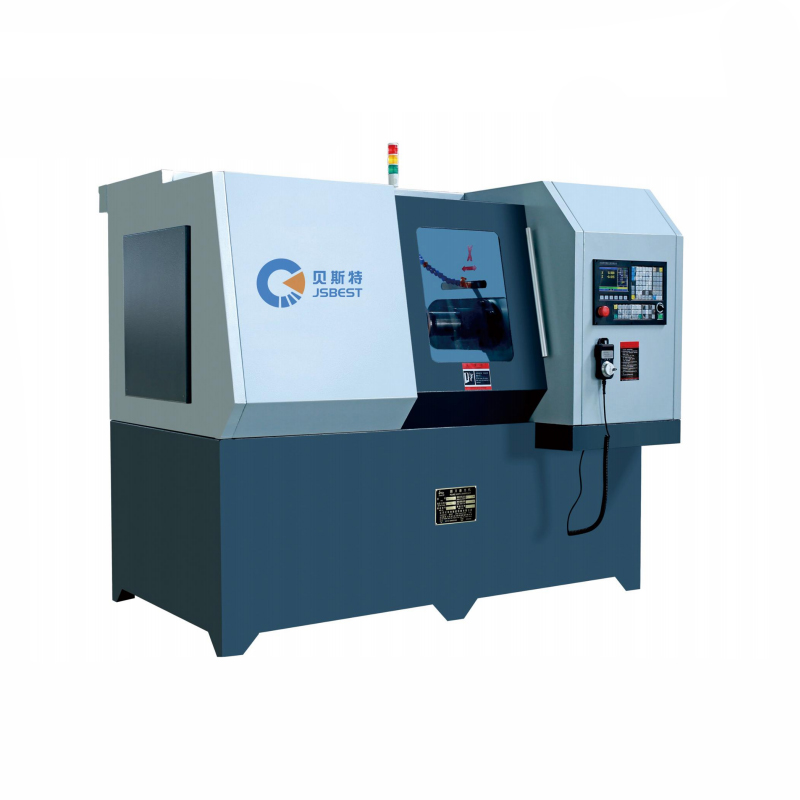
CNC körkéses csiszológép szerkezeti jellemzői: • Nagy csiszolási pontosság, az orsó és a kés t...
See DetailsTudjon meg többet iparági kiállításainkról és cégünk legutóbbi eseményeiről.